How did a church made out of paper in Japan end up in the middle of Taiwan?
一座在日本建造的紙教堂為何會飄洋過海來到中台灣?
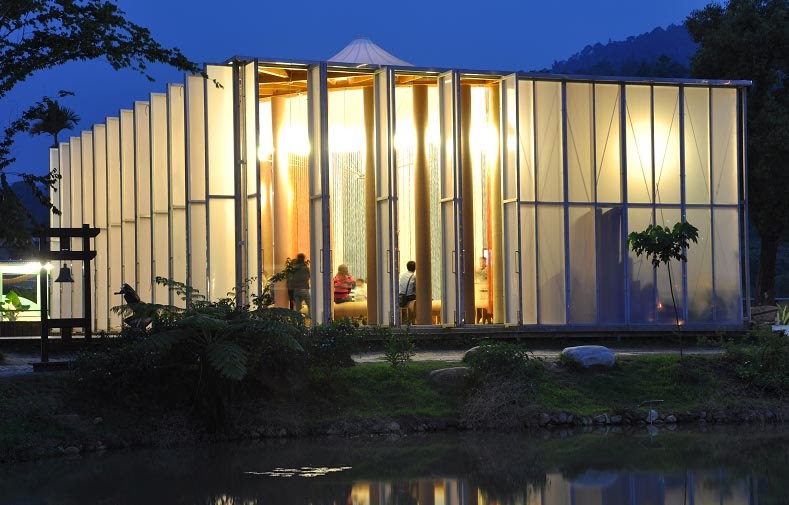
Paper is useful for many things, but can you imagine building a church with it? _(1)_ example can be found in Nantou County's Puli township. The Paper Dome, a church made out of paper, has been the center of attention _(2)_ since its arrival from Japan. Its main structure is _(3)_ 58 cardboard columns, with each measuring 325 millimeters wide and five meters high. At first, the Paper Dome was built as a replacement for a church that was destroyed in a fire in Kobe's 1995 earthquake. It served as a _(4)_ house of worship and community center for residents in Nagata, Japan. Its construction was intended to unite the _(5)_ of the earthquake and bring them hope in the darkest hours of their lives.
紙是做成許多東西的有用材料,但你能想像用紙建造一座教堂嗎?南投縣埔里鎮裡就有這樣的例子。自從紙教堂(顧名思義就是用紙做的教堂)從日本抵達後,它便一直是眾人注目的焦點。紙教堂的主要結構是由 58 根紙管組合而成,每根紙管寬 325 公釐,長 5 公尺。一開始,紙教堂的建立是作為某座教堂的替代處,那座教堂在 1995 年神戶大地震中毀於一場火災。紙教堂當時是作為日本長田區居民的臨時禮拜堂及聚會場所。其建造的目的是要讓那場地震的生還者團結起來,為他們生命中最黑暗的時刻帶來希望。
So how did this Paper Dome end up in Nantou? In 2005, the Paper Dome was scheduled to be torn down to _(6)_ a new concrete church. The New Homeland Foundation, a Puli-based non-profit organization, heard the news and thought it would be a shame to let the unique building that was a symbol of hope and rejuvenation be reduced to rubble. They _(7)_ that the church be relocated to Puli, the epicenter of the 921 earthquake in 1999. Now, the Paper Dome helps people in Taiwan find the strength to rebuild their lives, just as it did for the Japanese.
那麼這座紙教堂為什麼最後會在南投呢?在 2005 年,紙教堂原本預計要被拆除以騰出空間蓋新的水泥教堂。然而埔里的非營利事業組織新故鄉文教基金會聽到這個消息後,覺得讓這樣一座象徵希望及再生的獨特建築淪為瓦礫實在很可惜。因此他們提議把教堂遷到埔里,也就是 1999 年 921 地震的震央所在地。現在,紙教堂幫助台灣人民找到重建生活的力量,就如同它當初帶給日本人民的力量一般。
1. (A) For (B) What if (C) Such (D) One such
2. (A) far (B) ever (C) only (D) after
3. (A) comprised of(B) composed with(C) consisted of (D) concerned with
4. (A) tolerant (B) potential (C) temporary (D) superficial
5. (A) volunteers (B) survivors (C) competitors (D) participants
6. (A) take over (B) lay off (C) give rise to (D) make room for
7. (A) described (B) threatened (C) proposed (D) expected
So how did this Paper Dome end up in Nantou? In 2005, the Paper Dome was scheduled to be torn down to _(6)_ a new concrete church. The New Homeland Foundation, a Puli-based non-profit organization, heard the news and thought it would be a shame to let the unique building that was a symbol of hope and rejuvenation be reduced to rubble. They _(7)_ that the church be relocated to Puli, the epicenter of the 921 earthquake in 1999. Now, the Paper Dome helps people in Taiwan find the strength to rebuild their lives, just as it did for the Japanese.
那麼這座紙教堂為什麼最後會在南投呢?在 2005 年,紙教堂原本預計要被拆除以騰出空間蓋新的水泥教堂。然而埔里的非營利事業組織新故鄉文教基金會聽到這個消息後,覺得讓這樣一座象徵希望及再生的獨特建築淪為瓦礫實在很可惜。因此他們提議把教堂遷到埔里,也就是 1999 年 921 地震的震央所在地。現在,紙教堂幫助台灣人民找到重建生活的力量,就如同它當初帶給日本人民的力量一般。
1. (A) For (B) What if (C) Such (D) One such
2. (A) far (B) ever (C) only (D) after
3. (A) comprised of(B) composed with(C) consisted of (D) concerned with
4. (A) tolerant (B) potential (C) temporary (D) superficial
5. (A) volunteers (B) survivors (C) competitors (D) participants
6. (A) take over (B) lay off (C) give rise to (D) make room for
7. (A) described (B) threatened (C) proposed (D) expected
| 原來如此 |
1. One such example can be found in Nantou County's Puli township.
理由:
a. (A) For example, S + V 舉例來說,……
注意:
For example 為副詞片語,無法作主詞用,因此 For 置入後用法不合,故 (A) 不可選。
例: I like tropical fruits. For example, pineapples are my favorite.
(我喜歡熱帶水果。例如,鳳梨就是我的最愛。)
(B) What if + S + V...? 萬一……怎麼辦?
注意:
What if 之後引導的為一疑問句,其後需有問號,而本空格後為句點,故 (B) 不可選。
例: What if the teacher finds out we cheated on the exam?
(萬一老師發現我們考試作弊怎麼辦?)
(C) such 作形容詞時,須與名詞並用。與單數可數名詞並用時,要置於不定冠詞(a/an)之前。與不可數名詞並用時,則 such 之後無須加冠詞。
例: It's such a terrible shame that Sam died so young.
(山姆英年早逝真叫人不勝唏噓。)
例: It is such a good music that I bought the CD. (╳)
→ It is such good music that I bought the CD. (○)
(這音樂這麼好,所以我買了這張 CD。)
(D) one(一個)是數量詞,視作不定冠詞 a/an,之後即可接單數名詞(如 one girl),與 such 並用時,such 之後不可再接不定冠詞 a/an,否則將造成冠詞的重複。
例: Debby is attracted to humorous people, and Kent is one such man.
(黛比對幽默的人有好感,而肯特就是這樣的人。)
b. 根據上述,可知 (D) 應為正選。
2. ..., has been the center of attention ever since its arrival from Japan.
理由:
a. far 為副詞,可用來修飾比較級形容詞或副詞,而無法用來修飾 since,故 (A) 不可選。
例: Your room is far more spacious than mine.
(你的房間比我的房間寬敞很多。)
b. ever 是副詞,常與 since(自從)並用,以修飾 since。因此 ever 置入後符合用法,故選 (A)。
例: Ever since I met Julie, she has been very nice.
(打從我認識茱莉,她的人就一直這麼好。)
c. only 之後多接介詞片語或 when/after 引導的副詞子句,故 (C) 不可選。
例: Only by working hard can you accomplish your goal.
(只有靠努力你才能達成目標。)
例: Only when I am late for work do I take a taxi.
(我只有在遲到時才會搭計程車上班。)
d. after 不管作介詞或副詞連接詞,其後均不可再與 since 並用,故 (D) 亦不可選。
3. Its main structure is comprised of 58 cardboard columns, with each measuring...
理由:
a. (A) be comprised of... 由……組成
= be composed of...
= consist of...
例: The book is comprised of stories written by children.
(這本書是由小朋友所寫的故事匯集而成。)
(D) be concerned with... 關心……
例: Adam is only concerned with how to improve his business.
(亞當只關心要如何改善他的生意。)
b. 根據語意、用法,可知應選 (A);(B)、(C) 用法不合而不可選;(D) concerned with 置入後語意不合,故亦不可選。
4. It served as a temporary house of worship and community center for residents in Nagata, Japan.
理由:
a. (A) tolerant a. 容忍的;寬恕的
be tolerant of... 容忍……
例: My mother is not tolerant of my brother's laziness.
(我媽媽無法容忍我弟弟的懶惰成性。)
(B) potential a. 有潛力的,可能的
a potential customer 潛在客戶
(C) temporary a. 暫時的
permanent a. 永久的
例: The apartment is just a temporary residence for us.
(這棟公寓對我們而言只是暫時的居所。)
(D) superficial a. 膚淺的
例: Amanda is so superficial that she only wants rich friends.
(艾曼達很膚淺,她只想要有錢的朋友。)
b. 根據語意,可知應選 (C)。
5. Its construction was intended to unite the survivors of the earthquake and...
理由:
a. (A) volunteer n. 自願者
(B) survivor n. 倖存者
(C) competitor n. 競爭者
(D) participant n. 參與者
b. 根據語意,可知應選 (B),置入後表其建造的目的是要讓那場地震的『生還者』團結起來,為他們生命中最黑暗的時刻帶來希望。
6. In 2005, the Paper Dome was scheduled to be torn down to make room for a new concrete church.
理由:
a. (A) take over... 接手……
例: I will take over the project if you think you can't handle it.
(如果你覺得自己無法勝任,我會接手這項專案。)
(B) lay off... 解雇……,將……裁員
例: Thousands in the airline industry were laid off after the 911 attacks.
(911 恐怖攻擊事件後,航空業有數千名員工 遭到裁員。)
(C) give rise to... 引起∕導致……
例: John's speech gave rise to a lot of yelling from the audience.
(約翰的演說引起了聽眾的大肆叫囂。)
(D) make room for... 為……騰出空間
例: We are trying to make room for this big table.
(我們正設法騰出空間放這張大桌子。)
b. 根據語意,可知應選 (D),置入後表紙教堂原本預計要被拆除以『騰出空間』來蓋新的水泥教堂。
7. They proposed that the church be relocated to Puli, the epicenter of the 921 earthquake in 1999.
理由:
a. (A) describe vt. 描述
(B) threaten vt. 威脅
(C) propose vt. 提議,建議
propose + that 子句 提議∕建議……
注意:
propose 作『提議,建議』時,為意志動詞,接 that 子句作受詞時,that 子句中須置助動詞 should,但 should 往往予以省略,而形成主詞之後直接加原形動詞的用法。
例: The legislator proposed that taxes on cigarettes be increased.
(那位立法委員提議香煙稅應該提高。)
(D) expect vt. 預料,預期
expect + that 子句 預料∕預期……
例: Little did we expect that our team would win the championship.
(我們一點也沒料到我們的隊伍會奪得冠軍。)
b. 空格後 that 子句中的動詞為原形 be 動詞,根據上述用法,可知應選 (C)。
理由:
a. (A) For example, S + V 舉例來說,……
注意:
For example 為副詞片語,無法作主詞用,因此 For 置入後用法不合,故 (A) 不可選。
例: I like tropical fruits. For example, pineapples are my favorite.
(我喜歡熱帶水果。例如,鳳梨就是我的最愛。)
(B) What if + S + V...? 萬一……怎麼辦?
注意:
What if 之後引導的為一疑問句,其後需有問號,而本空格後為句點,故 (B) 不可選。
例: What if the teacher finds out we cheated on the exam?
(萬一老師發現我們考試作弊怎麼辦?)
(C) such 作形容詞時,須與名詞並用。與單數可數名詞並用時,要置於不定冠詞(a/an)之前。與不可數名詞並用時,則 such 之後無須加冠詞。
例: It's such a terrible shame that Sam died so young.
(山姆英年早逝真叫人不勝唏噓。)
例: It is such a good music that I bought the CD. (╳)
→ It is such good music that I bought the CD. (○)
(這音樂這麼好,所以我買了這張 CD。)
(D) one(一個)是數量詞,視作不定冠詞 a/an,之後即可接單數名詞(如 one girl),與 such 並用時,such 之後不可再接不定冠詞 a/an,否則將造成冠詞的重複。
例: Debby is attracted to humorous people, and Kent is one such man.
(黛比對幽默的人有好感,而肯特就是這樣的人。)
b. 根據上述,可知 (D) 應為正選。
2. ..., has been the center of attention ever since its arrival from Japan.
理由:
a. far 為副詞,可用來修飾比較級形容詞或副詞,而無法用來修飾 since,故 (A) 不可選。
例: Your room is far more spacious than mine.
(你的房間比我的房間寬敞很多。)
b. ever 是副詞,常與 since(自從)並用,以修飾 since。因此 ever 置入後符合用法,故選 (A)。
例: Ever since I met Julie, she has been very nice.
(打從我認識茱莉,她的人就一直這麼好。)
c. only 之後多接介詞片語或 when/after 引導的副詞子句,故 (C) 不可選。
例: Only by working hard can you accomplish your goal.
(只有靠努力你才能達成目標。)
例: Only when I am late for work do I take a taxi.
(我只有在遲到時才會搭計程車上班。)
d. after 不管作介詞或副詞連接詞,其後均不可再與 since 並用,故 (D) 亦不可選。
3. Its main structure is comprised of 58 cardboard columns, with each measuring...
理由:
a. (A) be comprised of... 由……組成
= be composed of...
= consist of...
例: The book is comprised of stories written by children.
(這本書是由小朋友所寫的故事匯集而成。)
(D) be concerned with... 關心……
例: Adam is only concerned with how to improve his business.
(亞當只關心要如何改善他的生意。)
b. 根據語意、用法,可知應選 (A);(B)、(C) 用法不合而不可選;(D) concerned with 置入後語意不合,故亦不可選。
4. It served as a temporary house of worship and community center for residents in Nagata, Japan.
理由:
a. (A) tolerant a. 容忍的;寬恕的
be tolerant of... 容忍……
例: My mother is not tolerant of my brother's laziness.
(我媽媽無法容忍我弟弟的懶惰成性。)
(B) potential a. 有潛力的,可能的
a potential customer 潛在客戶
(C) temporary a. 暫時的
permanent a. 永久的
例: The apartment is just a temporary residence for us.
(這棟公寓對我們而言只是暫時的居所。)
(D) superficial a. 膚淺的
例: Amanda is so superficial that she only wants rich friends.
(艾曼達很膚淺,她只想要有錢的朋友。)
b. 根據語意,可知應選 (C)。
5. Its construction was intended to unite the survivors of the earthquake and...
理由:
a. (A) volunteer n. 自願者
(B) survivor n. 倖存者
(C) competitor n. 競爭者
(D) participant n. 參與者
b. 根據語意,可知應選 (B),置入後表其建造的目的是要讓那場地震的『生還者』團結起來,為他們生命中最黑暗的時刻帶來希望。
6. In 2005, the Paper Dome was scheduled to be torn down to make room for a new concrete church.
理由:
a. (A) take over... 接手……
例: I will take over the project if you think you can't handle it.
(如果你覺得自己無法勝任,我會接手這項專案。)
(B) lay off... 解雇……,將……裁員
例: Thousands in the airline industry were laid off after the 911 attacks.
(911 恐怖攻擊事件後,航空業有數千名員工 遭到裁員。)
(C) give rise to... 引起∕導致……
例: John's speech gave rise to a lot of yelling from the audience.
(約翰的演說引起了聽眾的大肆叫囂。)
(D) make room for... 為……騰出空間
例: We are trying to make room for this big table.
(我們正設法騰出空間放這張大桌子。)
b. 根據語意,可知應選 (D),置入後表紙教堂原本預計要被拆除以『騰出空間』來蓋新的水泥教堂。
7. They proposed that the church be relocated to Puli, the epicenter of the 921 earthquake in 1999.
理由:
a. (A) describe vt. 描述
(B) threaten vt. 威脅
(C) propose vt. 提議,建議
propose + that 子句 提議∕建議……
注意:
propose 作『提議,建議』時,為意志動詞,接 that 子句作受詞時,that 子句中須置助動詞 should,但 should 往往予以省略,而形成主詞之後直接加原形動詞的用法。
例: The legislator proposed that taxes on cigarettes be increased.
(那位立法委員提議香煙稅應該提高。)
(D) expect vt. 預料,預期
expect + that 子句 預料∕預期……
例: Little did we expect that our team would win the championship.
(我們一點也沒料到我們的隊伍會奪得冠軍。)
b. 空格後 that 子句中的動詞為原形 be 動詞,根據上述用法,可知應選 (C)。
| 精解字詞片語 |
1. replacement n. 替代品;替代
例: The plastic box is a replacement for my laundry basket.
(這個塑膠箱是我洗衣籃的替代品。)
2. serve as... 充當……(之用)
例: This machine can serve as an air conditioner in the summer and a heater in the winter.
(這台機器夏天可以當冷氣,冬天則可當暖氣用。)
3. construction n. 建造
under construction 建造∕施工中
例: The park has been under construction for five months.
(這座公園已經蓋了 5 個月。)
4. be intended to V (本來)是要……
例: This drug is intended to make me sleepy, but I'm still wide awake.
(這藥本來是要幫我入睡的,可我卻非常清醒。)
5. unite vt. 使團結,使聯合
例: The disaster united lots of people in Taiwan.
(那場災難將許多台灣人凝聚在一起。)
6. end up + 介詞片語 最後∕結果∕到頭來……
例: The murderer ended up in prison for the rest of his life.
(那名謀殺犯最後在獄中度過餘生。)
7. be scheduled to V 預定要……
例: My boss is scheduled to fly back to Taipei at noon tomorrow.
(我的老闆預計明天中午時分飛回台北。)
8. tear down... 將(建築物)拆毀∕拆除
tear up... 將(紙張、公文、報告等)撕毀
例: The old cabin was torn down after it caught on fire.
(這間老舊的小屋在火災後遭到拆除。)
例:Johnny tore up the letter right after he finished reading it.
(強尼一看完信後就立刻把它撕毀。)
9. be reduced to... 淪落至∕淪落為……
例: Jack was reduced to begging after he lost everything he had.
(在失去所有後,傑克淪落到乞討的地步。)
例: The plastic box is a replacement for my laundry basket.
(這個塑膠箱是我洗衣籃的替代品。)
2. serve as... 充當……(之用)
例: This machine can serve as an air conditioner in the summer and a heater in the winter.
(這台機器夏天可以當冷氣,冬天則可當暖氣用。)
3. construction n. 建造
under construction 建造∕施工中
例: The park has been under construction for five months.
(這座公園已經蓋了 5 個月。)
4. be intended to V (本來)是要……
例: This drug is intended to make me sleepy, but I'm still wide awake.
(這藥本來是要幫我入睡的,可我卻非常清醒。)
5. unite vt. 使團結,使聯合
例: The disaster united lots of people in Taiwan.
(那場災難將許多台灣人凝聚在一起。)
6. end up + 介詞片語 最後∕結果∕到頭來……
例: The murderer ended up in prison for the rest of his life.
(那名謀殺犯最後在獄中度過餘生。)
7. be scheduled to V 預定要……
例: My boss is scheduled to fly back to Taipei at noon tomorrow.
(我的老闆預計明天中午時分飛回台北。)
8. tear down... 將(建築物)拆毀∕拆除
tear up... 將(紙張、公文、報告等)撕毀
例: The old cabin was torn down after it caught on fire.
(這間老舊的小屋在火災後遭到拆除。)
例:Johnny tore up the letter right after he finished reading it.
(強尼一看完信後就立刻把它撕毀。)
9. be reduced to... 淪落至∕淪落為……
例: Jack was reduced to begging after he lost everything he had.
(在失去所有後,傑克淪落到乞討的地步。)
| 單字小舖 |
1. dome n. 穹狀建築物;圓屋頂
2. township n. 小鎮
3. cardboard a. 硬紙板製的 & n. 硬紙板
4. column n. 圓柱,柱狀物
5. millimeter n. 公釐
6. worship n.(做)禮拜;禮拜儀式
a house of worship 禮拜堂
7. community n. 社區,社群
8. resident n. 居民
9. concrete a. 混凝土製的 & n. 混凝土
10. non-profit a. 非營利的
11. rejuvenation n. 重生;恢復活力
12. rubble n. 瓦礫
13. relocate vt. 將……重新安置,搬遷
14. epicenter n.(地震)震央
15. strength n. 力量
2. township n. 小鎮
3. cardboard a. 硬紙板製的 & n. 硬紙板
4. column n. 圓柱,柱狀物
5. millimeter n. 公釐
6. worship n.(做)禮拜;禮拜儀式
a house of worship 禮拜堂
7. community n. 社區,社群
8. resident n. 居民
9. concrete a. 混凝土製的 & n. 混凝土
10. non-profit a. 非營利的
11. rejuvenation n. 重生;恢復活力
12. rubble n. 瓦礫
13. relocate vt. 將……重新安置,搬遷
14. epicenter n.(地震)震央
15. strength n. 力量
答案:1. (D) 2. (B) 3. (A) 4. (C) 5. (B) 6. (D) 7. (C)